
Key Takeaways
- Daily broad-spectrum sunscreen (SPF 30 or higher) is the single most important step for healthy, youthful-looking skin (American Academy of Dermatology).
- A nutrient-rich diet — fruits, vegetables and healthy fats — supports skin from the inside; what is good for your body is good for your skin.
- Gentle cleansing and daily moisturising (on damp skin) often do more than expensive multi-step routines.
- Be cautious with skin “myths” — speak to a dermatologist before major diet or product changes.
Glowing skin is less about products and more about conditions. Give your skin cells what they need — adequate hydration, the right nutrients, consistent sleep, and protection from daily damage — and the appearance takes care of itself over time. Most people chasing a better complexion are missing one or two of these basics, not a miracle ingredient.
This guide covers the fundamentals that actually move the needle, with no expensive treatments required.
This article is for informational purposes only. Always consult a qualified healthcare professional before making changes to your diet, health, or lifestyle.
Table of contents
- Understanding natural skin health
- Nutrition and hydration for radiance
- Essential natural skincare routine
- Lifestyle factors that affect skin glow
- Natural ingredients worth using
- Frequently asked questions
Understanding natural skin health

Glowing skin is essentially well-hydrated, smooth skin that reflects light evenly. When dead cells accumulate on the surface, or when skin is dehydrated or inflamed, that reflective quality disappears. The dullness most people complain about isn’t a skin type — it’s a condition, and it responds to fairly simple interventions.
Your skin replaces itself roughly every 28 days. Old cells shed from the surface and new ones move up from the deeper layers. When that cycle runs smoothly and the skin barrier stays intact, the result is a naturally even, healthy-looking complexion. When it’s disrupted — by sun damage, poor diet, stress, or inadequate hydration — the surface becomes uneven and dull. Understanding this renewal cycle is more useful than any product recommendation, because it tells you how long to wait before expecting results from a change you’ve made.
The skin barrier also prevents water loss. Healthline explains that a compromised skin barrier leads to increased water loss, sensitivity, and inflammation — all of which directly affect how your skin looks. Protecting that barrier is the single most important thing you can do for skin appearance, and it costs nothing.
Nutrition and hydration for radiance
What you eat shows up on your skin more directly than most people realize, usually with a delay of a few weeks. This is why dietary changes take time to produce visible results — you’re waiting for the new cells forming now to reach the surface.
Antioxidant-rich foods — berries, leafy greens, orange and red vegetables — provide vitamins A, C, and E that protect skin cells from oxidative damage. Vitamin C specifically is required for collagen synthesis. Without adequate vitamin C, collagen production slows, which affects skin firmness and texture. Bell peppers and citrus fruits are among the highest dietary sources.
Omega-3 fatty acids from oily fish, walnuts, and flaxseed reduce inflammation and help maintain the lipid layer that keeps skin moisturized from within. People who significantly increase omega-3 intake often notice reduced redness and a softer skin texture within four to six weeks. I started eating salmon twice a week and noticed my skin looked less irritated within about a month — nothing dramatic, but noticeable.
Hydration matters, though its effect is often overstated. Medical News Today notes that the relationship between water intake and skin appearance is modest in well-hydrated people, but those who are chronically mildly dehydrated do show meaningful improvement when they increase water intake. Eight glasses daily is a reasonable baseline. Green tea counts toward that total and also provides polyphenols with anti-inflammatory properties.
Essential natural skincare routine
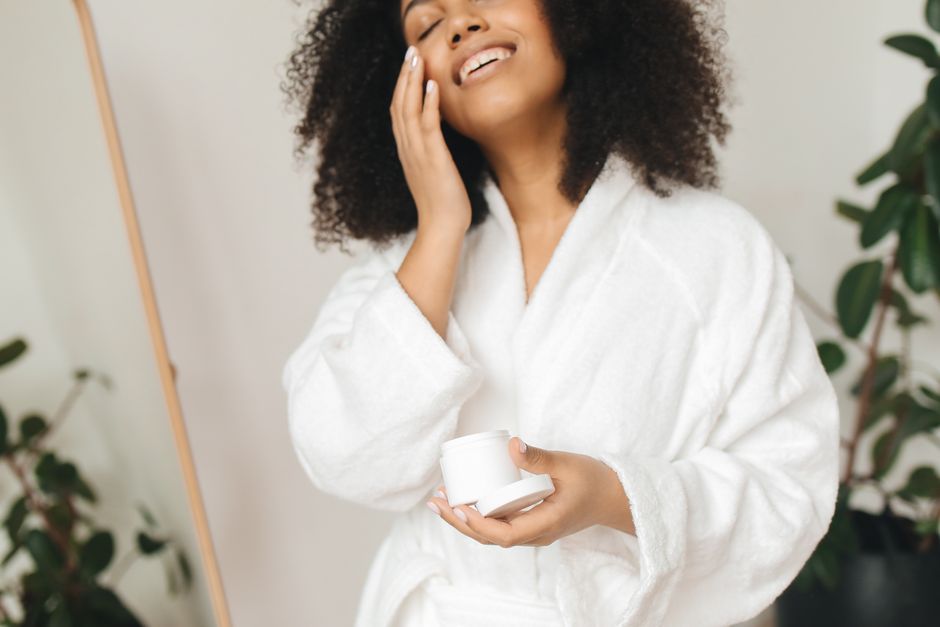
A basic routine that works is more valuable than an elaborate one you won’t maintain. Three steps cover most of what skin needs externally.
Cleansing removes dirt, excess oil, and the dead cells that accumulate during the day and overnight. Use lukewarm water — hot water strips natural oils and weakens the skin barrier. A mild, fragrance-free cleanser is sufficient for most people. Over-cleansing is a genuine problem; twice daily is enough for almost everyone, and once daily works fine for people with dry or sensitive skin.
Exfoliation two to three times a week accelerates natural cell turnover and immediately improves skin texture by removing the outermost layer of dead cells. Natural exfoliants like fine sugar, ground oatmeal, or diluted fruit enzymes work without the micro-tears that harsh scrubs can cause. Don’t exfoliate broken, sunburned, or actively inflamed skin — it makes things worse, not better.
Moisturizing seals the skin barrier after cleansing. Aloe vera, jojoba oil, and hyaluronic acid are all well-tolerated options that work across different skin types. Apply moisturizer while skin is still slightly damp to lock in existing moisture rather than just sitting on the surface. Introduce new products one at a time, at least a week apart, so you can identify what’s working and what’s causing a reaction.
Lifestyle factors that affect skin glow

The lifestyle factors that affect skin appearance are the same ones that affect overall health — and they tend to be more impactful than any topical product.
Sleep is where cellular repair happens. During deep sleep phases, growth hormone is released and skin cells rebuild. Seven to nine hours of quality sleep produces visibly different skin than chronic sleep deprivation — you can usually see the difference in your own face after a few nights of poor sleep. It’s the most immediate lifestyle variable with the most obvious effect on skin appearance.
Chronic stress raises cortisol levels, which drives inflammation and can trigger or worsen acne, eczema, and rosacea. The skin-stress connection is well established. Regular physical activity reduces cortisol, improves circulation, and delivers more oxygen and nutrients to skin cells. A 30-minute walk five days a week produces measurable changes in circulation within a few weeks — not a dramatic transformation, but a real one.
Sun protection is non-negotiable. UV exposure is the primary cause of premature skin aging, dark spots, and uneven texture. The American Academy of Dermatology recommends applying broad-spectrum SPF 30 or higher daily, regardless of whether it’s cloudy or you plan to spend time outside. Most of the skin damage people attribute to aging is actually cumulative UV damage — and it’s almost entirely preventable.
Natural ingredients worth using
Several kitchen ingredients genuinely improve skin when used correctly. The key qualifier is “when used correctly” — natural doesn’t mean automatically safe or gentle.
Raw honey is the most versatile. Its antimicrobial properties help with acne-prone skin, and it’s deeply moisturizing without clogging pores. Apply a thin layer to clean skin, leave for 15 to 20 minutes, and rinse with warm water. It works particularly well as a weekly treatment for dull or dry skin.
Green tea applied topically provides antioxidant protection. Brew a cup, let it cool completely, and apply with a cotton pad as a toner. The polyphenols in green tea reduce inflammation and can help calm redness over time. It’s one of the more underrated options because it requires no preparation beyond what you might already make to drink.
Turmeric mixed with plain yogurt or milk has anti-inflammatory properties that can reduce redness and help even out skin tone. Use a small amount — turmeric stains, and too much will temporarily tint your skin yellow. Leave on for ten minutes maximum and rinse thoroughly. Patch test first, as some people react to it.
Lemon juice and other citrus should be used cautiously. Undiluted citrus juice is too acidic for direct skin application in most people and can cause irritation or chemical burns, especially on sensitive skin. If you use it, dilute it heavily and never apply before sun exposure — citric acid increases UV sensitivity significantly.
Allow four to six weeks of consistent use before evaluating whether something is working. Skin turns over on a 28-day cycle, so changes that begin at the cellular level take time to become visible at the surface.
Frequently asked questions
If you have a diagnosed skin condition such as eczema, rosacea, psoriasis, or acne requiring medical treatment, consult a dermatologist before changing your skincare routine. Some natural ingredients can aggravate these conditions.
Sources & Further Reading
- American Academy of Dermatology — Does diet make a difference to skin?
- Mayo Clinic — Skin care: 5 tips for healthy skin
- Harvard Health — Don’t fall for these skin myths
- American Academy of Dermatology — Basic skin care
Researched and reviewed by Arslan Qamar, founder of Wellness Tips Now. This article is for informational purposes only and is not a substitute for professional medical advice. Always consult a qualified healthcare provider before making major changes to your diet or skincare, particularly if you have a skin condition.

Arslan Qamar is the founder of Wellness Tips Now. A long-standing personal interest in natural health led him to spend years self-educating — reading widely and researching what the evidence actually supports. He created this site to share that research in plain, practical language. Arslan is not a medical professional; every article is reviewed for accuracy before publishing, and nothing on this site is intended to replace advice from a qualified healthcare professional. His writing covers natural weight loss, home remedies, nutrition, skincare, sleep, and stress management.