Headaches can show up at the worst possible moments — mid-meeting, on a busy commute, right before something important. While over-the-counter medications work for many people, there are natural approaches worth knowing about that don’t involve reaching for a pill every time. These methods are simple, use things you likely already have at home, and work with your body rather than around it.
This article is for informational purposes only. Always consult a qualified healthcare professional before making changes to your diet, health, or lifestyle.
Table of contents
- Understanding your headache triggers
- Step one: the hydration and temperature technique
- Step two: pressure point relief method
- Step three: essential oil aromatherapy approach
- Step four: deep breathing and relaxation technique
- Final tips and important considerations
- Frequently asked questions
Understanding your headache triggers
Before trying any remedy, it helps to know what kind of headache you’re dealing with. Dehydration, stress, poor posture, and certain foods are among the most common triggers. Identifying yours makes a real difference in choosing what will actually help.
According to the World Health Organization, tension-type headaches are the most common headache disorder worldwide, often caused by muscle tension in the neck and scalp. Bright lights, loud noise, and strong smells can also bring them on.
Keeping a basic headache journal works better than most people expect. Write down when the headache started, what you ate or drank beforehand, your sleep the night before, and your stress level. After a few weeks, patterns usually emerge. I started doing this and realized most of my headaches hit on days I skipped breakfast — something I’d never connected before. That kind of specific knowledge is more useful than any general remedy list.
Step one: the hydration and temperature technique
Dehydration is one of the most commonly missed causes of headaches, and it’s also one of the easiest to fix. Drinking water and applying a cool compress at the same time addresses the problem from two directions. Rehydrating helps restore normal blood flow and dilutes substances that can trigger pain. The cool temperature causes blood vessels to constrict slightly, which can reduce the throbbing sensation.
Start by drinking two full glasses of water over fifteen minutes. Room temperature water is better than ice cold, which can cause its own discomfort in people with sensitive teeth or those prone to cold-triggered headaches. At the same time, dampen a clean cloth with cold water and rest it across your forehead and temples for ten to fifteen minutes.
This approach works best for headaches brought on by mild dehydration or heat. The Mayo Clinic notes that even mild dehydration can cause headaches, which is why this is often the first thing worth trying before anything else. Most people either notice improvement within thirty minutes or realize something else is going on.
Step two: pressure point relief method
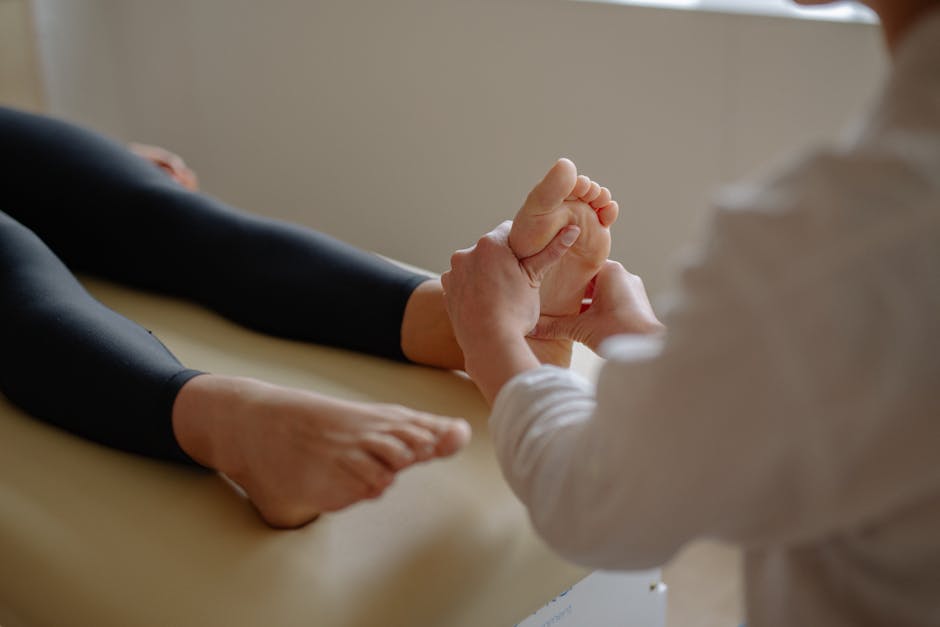
Pressure point therapy has been used in traditional Chinese medicine for centuries, and some of its applications for headache relief have held up under modern scrutiny. The basic idea is that applying firm pressure to specific points on the body can interrupt pain signals before they fully register.
The most accessible point for headache relief is LI4, located in the soft webbing between your thumb and index finger. Apply firm, steady pressure there with your opposite thumb for sixty to ninety seconds while breathing slowly. It should feel uncomfortable but not painful. Switch hands and repeat.
Next, find the two points at the base of your skull where it meets your neck, roughly two inches out from the center line on either side. Pressing these simultaneously with your fingertips and holding for thirty to sixty seconds can release tension that travels up into the head. Many people feel a noticeable loosening in the neck and shoulders within a minute or two — it’s one of those things that sounds too simple but genuinely does something.
Finish with gentle circular massage at the temples. Use your middle fingers, starting at the outer edge and working inward, with light pressure for two to three minutes. This works best alongside slow, controlled breathing rather than as a standalone technique.
Step three: essential oil aromatherapy approach
The connection between smell and the brain’s pain centers is well-established. Scent molecules travel directly to the limbic system, which handles both pain perception and emotional response. This is why certain smells can shift how you feel almost immediately.
Peppermint oil is the most studied option for headache relief. Its active compound, menthol, creates a cooling sensation and may improve local blood flow. To use it safely, dilute two drops of peppermint essential oil in one tablespoon of a carrier oil such as coconut or jojoba oil. Apply to the temples in small circular motions, keeping it well away from your eyes. A 1996 study published in Cephalalgia found that peppermint oil applied to the forehead and temples reduced headache intensity comparably to acetaminophen in participants — a finding that surprised a lot of people at the time and has held up in subsequent reviews.
Lavender oil is a better fit for headaches linked to anxiety or poor sleep. Add three to four drops to a diffuser, or put a few drops on a tissue and inhale slowly for several minutes. Neither oil should be applied directly to skin without dilution, and children require extra caution — some essential oils are too concentrated for young skin and airways.
Step four: deep breathing and relaxation technique
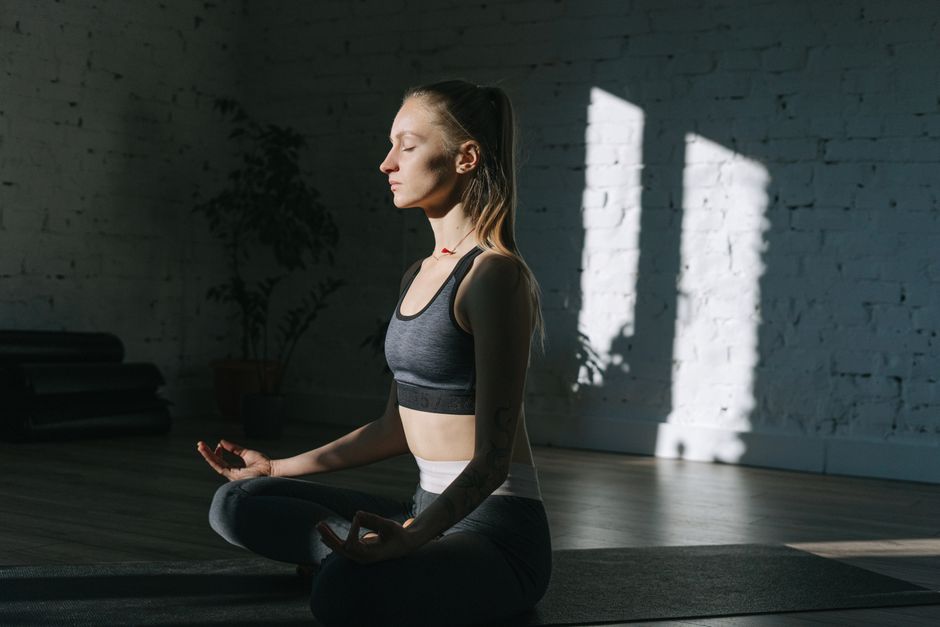
Stress is a major driver of tension headaches, and controlled breathing is one of the few tools that directly counters the physical stress response. It requires nothing, can be done anywhere, and takes about five minutes to produce a noticeable effect.
Sit with your feet flat on the floor and your hands resting on your knees. Breathe in through your nose for a count of four, letting your abdomen rise rather than your chest. Hold for four counts, then exhale through your mouth for a count of six. The longer exhale is the important part — it activates the parasympathetic nervous system, which tells your body it’s safe to relax. Muscle tension in the neck and scalp often drops within a few cycles.
Continue for five to ten minutes. With each exhale, consciously release tension in your jaw, neck, and shoulders. Most people hold tension in those areas without realizing it, and a headache is often the first sign it’s been building for a while.
The NHS recommends breathing exercises as a first-line approach for stress-related symptoms, including headaches. The technique works both as a treatment when a headache has already started and as a daily practice to reduce how often they occur.
Final tips and important considerations
These methods work better when you pick the one that fits your situation rather than trying all four at once when you’re already in pain. Hydration and temperature work fast for dehydration headaches. Pressure points and breathing are better for tension and stress. Aromatherapy suits people who want something passive while they rest.
Track what works. After three or four headaches, you’ll know which approach cuts the time short and which ones do nothing for your particular type.
That said, headaches that are frequent, severe, or come with fever, vision changes, neck stiffness, or confusion need medical attention. These natural approaches have real limitations, and some headache types are symptoms of something else entirely. Don’t delay seeing a doctor if something feels different from your usual pattern.
Frequently asked questions
These methods may support headache relief but are not a substitute for professional medical advice. If you experience frequent, severe, or unusual headaches, consult a qualified healthcare provider before relying on home remedies alone.

Arslan Qamar is the founder of Wellness Tips Now. A long-standing personal interest in natural health led him to spend years self-educating — reading widely and researching what the evidence actually supports. He created this site to share that research in plain, practical language. Arslan is not a medical professional; every article is reviewed for accuracy before publishing, and nothing on this site is intended to replace advice from a qualified healthcare professional. His writing covers natural weight loss, home remedies, nutrition, skincare, sleep, and stress management.